

... newer stories
Samstag, 21. Januar 2006
 Peacecamp 2006: "To be neither victims nor actors": Youth from Israel, the Palestinian Territories, Hungary and Austria explore ways and obstacles to coexistence and mutual understanding
 A Hadassah Austria Project sponsored by the Federal Ministry for Education, Science and Culture and the Karl Kahane Foundation
by Evelyn Böhmer-Laufer
peacecamp, 23:25h
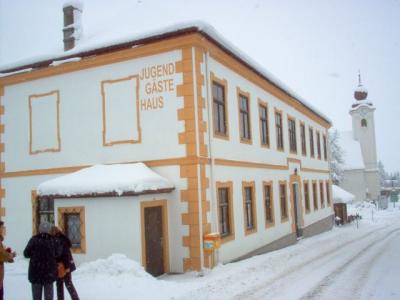 A peacecamp will take place in Franzen, Austria, at which youth from Israel, the Palestinian Territories, Hungary and Austria will explore their cultural, religious, national differences and similarities. Creative and competitive games, group-dynamic sessions and discussion groups will offer opportunities to explore the conscious and unconscious motives which may stand in the way to mutual understanding and turn intended cooperation into unfriendliness and hostility.
Psychoanalytic large groups will offer opportunity for introspection into unconscious, contradictory attitudes and feelings which may conflict with our declared attitudes and convictions. How will we confront these feelings? Will we be able to accept and integrate them or will we want to "expel" them, where will we "put" them, what will we do about them?
Adolescence is a time at which people can be more direct, more emotional, less inhibited than adults, a time at which the image of oneself, of others and of the world is not yet formed; adolescents can be more open, more courageous than adults; the development of their personality is not yet completed; they can still be shaped and formed by new experience and correct whatever view of the world has been conveyed to them by their parents. But they are neither reckless nor untroubled as we often like to see them, but rather affected by the political catastrophes of which their parents or grandparents had been victims. They are children of victims or children of actors and do perceive themselves as victims, or as actors, and the "other", accordingly, as avenger or enemy. This is how polarised images are passed on from one generation to another, how rigid images of the self and the "other" are being solidified and political changes impeded.
To confront these and other questions pertinent to the political awareness of young people is the aim of peacecamp 2006: What will we do when we discover the "enemy", the "stranger", the unloved and rejected "other" as a part of ourselves? What will this discovery do to our self-perception? How will it influence our perception of others?
4 groups of youth from Israel, the Palestinian Territories, Austria and Hungary will participate in the project. All groups will get a preparation beforehand; adult team-members will go through large-group analytic experience before the camp.
A psychological study conducted by the University of Vienna will assess the impact of the workshop on parameters like tolerance towards others, empathy, conflict-management, impulse control, political awareness and maturity.
Samstag, 24. Dezember 2005
Ö1-Sendung "Moment - Leben heute"
peacecamp, 15:50h
vom 25.8.05. (Dauer: 15' 23") als MP3 zum Download (1,76 MB)
(0 Kommentare) ... comment
About peacecamp 2005:
"Triffst du einen Fremden, sprich mit ihm"
Ein Hadassah-Austria Projekt unterstützt von der Europäischen Gemeinschaft, dem Bundesministerium für Bildung, Wissenschaft und Kunst und der Karl Kahane Stiftung
Evelyn Böhmer-Laufer
"Triffst du einen Fremden, sprich mit ihm"
Ein Hadassah-Austria Projekt unterstützt von der Europäischen Gemeinschaft, dem Bundesministerium für Bildung, Wissenschaft und Kunst und der Karl Kahane Stiftung
Evelyn Böhmer-Laufer
peacecamp, 15:44h
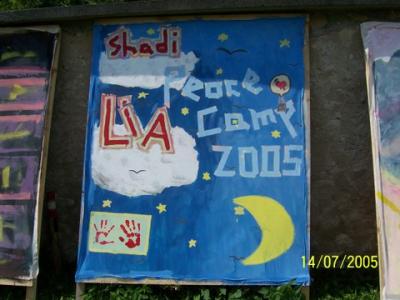
From 6. bis zum 15. Juli 2005 fand im Kärntner Ort Rechberg das dritte peacecamp statt: diesmal vier Gruppen mit insgesamt 36 Jugendlichen - arabische und jüdische Israelis, Österreicher und Slowenen. Zehn Tage lang beschäftigten sich diese mit Fragen ihrer persönlichen und nationalen Abstammung, Zugehörigkeit und Identität und lernten die unterschiedlichen kulturellen, religiösen und nationalen Merkmale aller beteiligten Gruppen kennen. Schwerpunkte des peacecamps waren die noch vor der Anreise erarbeiteten und in einem "Family Album" erfassten Familien- und persönlichen Lebensgeschichten der Teilnehmer, die szenisch dargestellten Charakteristika der jeweiligen Kultur, Religion und Geschichte jeder Gruppe sowie tägliche Gesprächsrunden zu Themen der persönlichen Einstellungen, Empfindungen und Gedanken der jungen TeilnehmerInnen im Rahmen einer psychoanalytischen Großgruppe.Auch die erwachsenen TeilnehmerInnen, zwei begleitende PädagogInnen pro Gruppe und vier Künstlerinnen, hatten Gelegenheit, im Rahmen täglich stattfindender, von einem Gruppenanalytiker geleiteten Gesprächsrunden ihre jeweiligen Gefühle und Einstellungen einer kritischen Prüfung zu unterziehen.
Schließlich boten gemeinsame kreative Tätigkeiten - Portrait-Zeichnen, Malen, Basteln, Tanzen, Musizieren sowie spannende sportliche Bewerbe - zahlreiche Gelegenheiten, mit Angehörigen der eigenen, aber auch der anderen, "fremden", Gruppen zu kooperieren und sich gemeinsam mit sehr unterschiedlichen Anderen diversen Aufgaben und Aktivitäten zu stellen. Besonders interessant waren Diskussionen über Religion und die damit verbundenen unterschiedlichen Lebensformen und Traditionen. Die Frage, ob es für jede der monotheistischen Religionen einen eigenen Gott oder eben nur einen einzigen Gott für alle Menschen gäbe, beschäftigte die Jugendlichen ebenso, wie die Frage, ob es zulässig sei, religiöse Glaubensgrundsätze zu hinterfragen. "Wer hat die Bibel, den Koran geschrieben, und wie kann man wissen, ob das, was in den Heiligen Schriften steht, wahr ist?" wurde arglos gefragt, und schon war man in ein Fettnäpfchen getreten und musste bei der streng gläubigen muslimischen Kollegin Abbitte leisten. "Darf man überhaupt fragen oder sagen, was man denkt?", wo Worte doch kränken und verletzten können, oder ist es besser, die eigene Einstellung hinter höflicher Zurückhaltung zu tarnen? "Deine Worte haben mich getötet!", empörte sich eine Teilnehmerin in sehr lebhafter Weise - muss man also zustimmen und schweigen, oder ist es zulässig, die von höflichem Quasi-Konsens geschaffene Distanz zugunsten der Offenlegung der wahren Gedanken und Gefühle aufzuheben, eine Konfrontation zu wagen und zu erleben, dass die Worte zwar gekränkt oder verärgert, jedoch nicht getötet haben, und dass die entstandenen Affekte und Gefühle ein besseres Verstehen und größere Nähe bewirken können? Ob und was diese Art, Fremden - auch unseren eigenen, fremden, ungeliebten und verpönten Ansichten und Gefühlen - zu begegnen, bewirkte, wird das Ergebnis einer Studie zeigen. Ein Forscher der Universität Wien hat das dritte peacecamp-Projekt begleitet und wird ermitteln, wie sich die Begegnung mit den Anderen, "Fremden", aber auch die Konfrontation mit den eigenen befremdenden oder uns entfremdeten Gefühlseinstellungen und Gedanken auf das Selbst- und Weltbild der am Projekt beteiligten jungen Menschen und auf ihre Empathie anderen Menschen und Gruppen gegenüber auswirkt.
Eine umfangreiche Dokumentation über peacecamp 2005 finden Sie unter http://peacecamptalks.blogger.de/
(0 Kommentare) ... comment
Montag, 5. Dezember 2005
peacecamps: Identities unsolved?
A Hadassah Austria Project with youth from the Middle East and from Europe
Evelyn Böhmer-Laufer
A Hadassah Austria Project with youth from the Middle East and from Europe
Evelyn Böhmer-Laufer
peacecamp, 23:33h
Since 2004 encounters of Jewish and Arab Israeli youth and Austrian as well as Slovenian youth have taken place in Austria and in Israel.
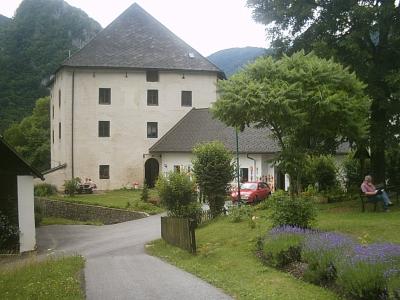
In a 10 days' workshop in the midst of a magnificently secluded Austrian landscape, they have worked on aspects of their personal, national, religious and historic identities and shared collections of documents assembled in their home countries in preparation of the encounter.
A second reunion of the group has taken place in Israel, where the adolescents toured the country together with the accompanying team of adults, and learned about the diverse and complex groups, nations and religions that live in this country.
Searching and establishing their identities as well as sharing their identities with each other were main elements though the phases of preparation as well as on the camps.
During the encounters, thrilling and creative in- and outdoor-activities, as well as psychoanalytic group work offered various opportunities to explore aspects of people's and groups' identities, which do sometimes separate, but may also connect people with each other.
The project is designed to make groups of adolescents meet and get to know each other, to learn about their respective cultural, religious, national, personal and other identities, to question and overcome prejudice and xenophobia and to bridge the gaps of group's and people's different identities.
The adolescents and a team of teachers, artists, psychologists and group psychoanalysts meet twice a year, once in Austria and once in Israel. The project foresees the active participation of all, adolescents as well as adults, in all activities of the workshop
An accompanying study is being conducted to assess the outcome of these encounters, the results of which will be published in the course of the year.
The project "peacecamps: Identities unsolved?" is a Hadassah Austria project, sponsored by the European Union, the Austrian Federal Ministry for Education, Science and Culture, and the Karl Kahane Foundation.
In a 10 days' workshop in the midst of a magnificently secluded Austrian landscape, they have worked on aspects of their personal, national, religious and historic identities and shared collections of documents assembled in their home countries in preparation of the encounter.
A second reunion of the group has taken place in Israel, where the adolescents toured the country together with the accompanying team of adults, and learned about the diverse and complex groups, nations and religions that live in this country.
Searching and establishing their identities as well as sharing their identities with each other were main elements though the phases of preparation as well as on the camps.
During the encounters, thrilling and creative in- and outdoor-activities, as well as psychoanalytic group work offered various opportunities to explore aspects of people's and groups' identities, which do sometimes separate, but may also connect people with each other.
The project is designed to make groups of adolescents meet and get to know each other, to learn about their respective cultural, religious, national, personal and other identities, to question and overcome prejudice and xenophobia and to bridge the gaps of group's and people's different identities.
The adolescents and a team of teachers, artists, psychologists and group psychoanalysts meet twice a year, once in Austria and once in Israel. The project foresees the active participation of all, adolescents as well as adults, in all activities of the workshop
An accompanying study is being conducted to assess the outcome of these encounters, the results of which will be published in the course of the year.
The project "peacecamps: Identities unsolved?" is a Hadassah Austria project, sponsored by the European Union, the Austrian Federal Ministry for Education, Science and Culture, and the Karl Kahane Foundation.
... older stories